
Peru
Abra Málaga Birding Tour
Abra Málaga Birding Tour
Duration
Day tour · 13 hours · Start time 05:00
Start/End
Cusco
Tour type
Private · Group
Level
Easy to moderate
Overview
Just three hours from Cusco, the Abra Malaga Pass offers one of the steepest and most diverse elevation gradients in the Andes. In a single day you cross three habitats: ancient Polylepis woodland at 4,440 m, puna grassland and subtropical cloud forest at around 2,000 m. Abra Malaga is the most reliable site on Earth for birds restricted to Polylepis forest – above all the critically endangered Royal Cinclodes. With spotting scope and patience, your guide also searches for White-browed Tit-Spinetail, Giant Conebill, Inca Wren and Cusco Brushfinch. Your entrance to the community-managed Thastayoq Polylepis Reserve directly supports reforestation and habitat protection. Private transport, a local birding guide, all entrance fees, box lunch, spotting scope as well as emergency oxygen and a first-aid kit are included.
Tour Code
Tour Language

 English, Spanish
Maximum altitude
Itinerary
Itinerary
Cusco – Abra Malaga Pass – Cloud Forest – Cusco
approx. 7 h birding · slow-paced walks · 4,440 m down to 2,000 m
approx. 3 h each way
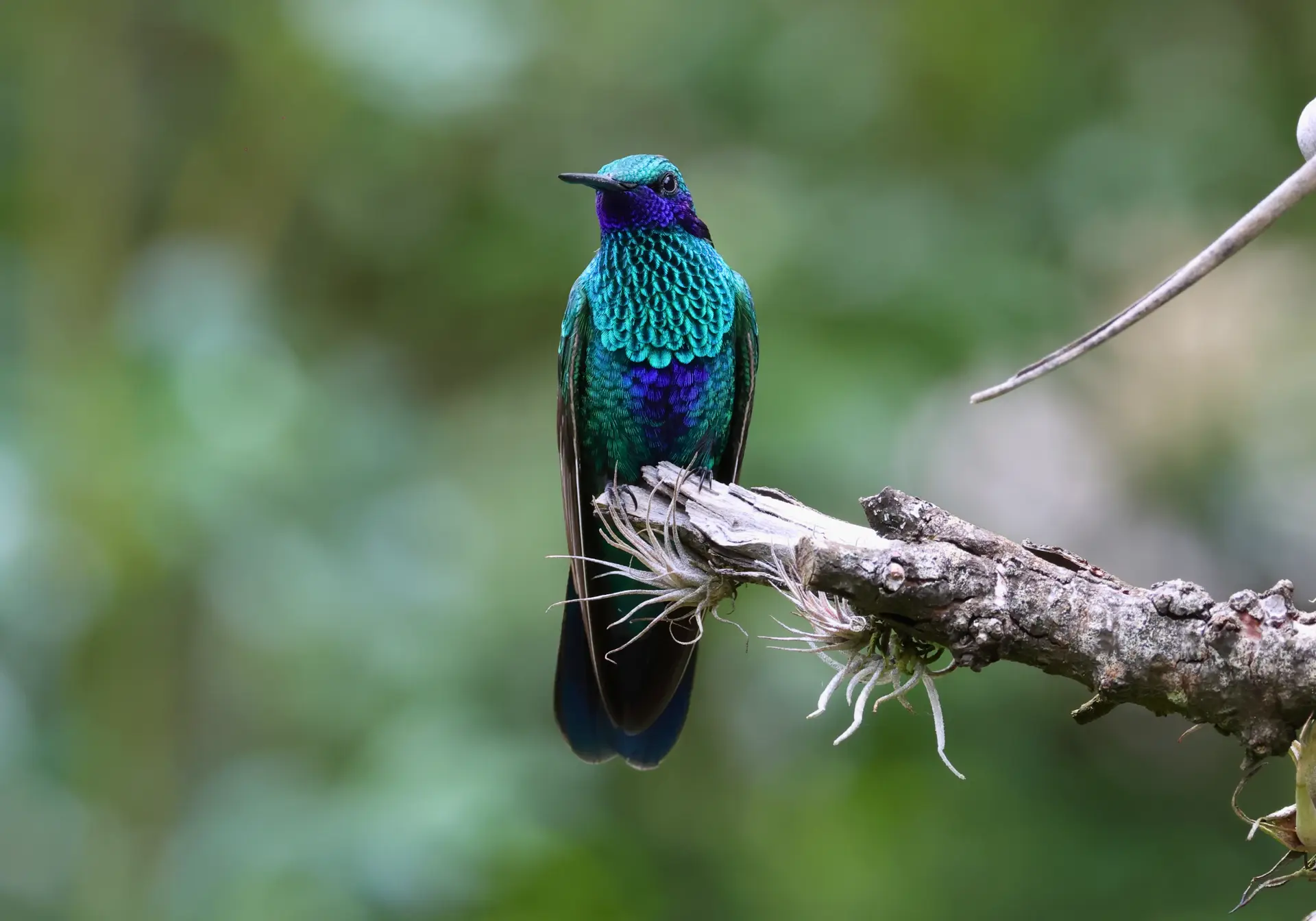
At 5:00 am your birding guide and private driver pick you up from your hotel in Cusco or the Sacred Valley. Around 7:30 am we reach the Abra Malaga Pass (4,440 m / 14,567 ft) as the morning sun lights up the Vilcanota range. On a slow-paced walk through the Polylepis forest of the Thastayoq Reserve, your guide sets up the spotting scope to find specialists such as the Royal Cinclodes, White-browed Tit-Spinetail and Giant Conebill. Around midday we slowly descend the eastern slope of the Andes and stop at mid-elevation for a box lunch with warm drinks and sweeping valley views. In the afternoon we enter the humid cloud forest (2,000–2,800 m) with bamboo thickets, bromeliads and tree ferns. Here we follow mixed-species flocks in search of the Inca Wren, Cusco Brushfinch, hummingbirds and colorful mountain-tanagers. We finish birding around 4:00 pm. Guests continuing to Machu Picchu are dropped at Ollantaytambo train station by 4:30 pm; everyone else is back at their hotel in Cusco around 6:00 pm.
Cusco – Abra Malaga Pass – Cloud Forest – Cusco
Itinerary
approx. 7 h birding · slow-paced walks · 4,440 m down to 2,000 m
approx. 3 h each way
At 5:00 am your birding guide and private driver pick you up from your hotel in Cusco or the Sacred Valley. Around 7:30 am we reach the Abra Malaga Pass (4,440 m / 14,567 ft) as the morning sun lights up the Vilcanota range. On a slow-paced walk through the Polylepis forest of the Thastayoq Reserve, your guide sets up the spotting scope to find specialists such as the Royal Cinclodes, White-browed Tit-Spinetail and Giant Conebill. Around midday we slowly descend the eastern slope of the Andes and stop at mid-elevation for a box lunch with warm drinks and sweeping valley views. In the afternoon we enter the humid cloud forest (2,000–2,800 m) with bamboo thickets, bromeliads and tree ferns. Here we follow mixed-species flocks in search of the Inca Wren, Cusco Brushfinch, hummingbirds and colorful mountain-tanagers. We finish birding around 4:00 pm. Guests continuing to Machu Picchu are dropped at Ollantaytambo train station by 4:30 pm; everyone else is back at their hotel in Cusco around 6:00 pm.
Price from
US$200.00
Services
What's included
Pre-Trip Briefing: Personal briefing at your hotel the evening before the tour.
Birding Guide: Local English/Spanish-speaking specialist with extensive regional field experience, vocalization expertise and professional gear.
Private Transportation: Dedicated vehicle with an experienced mountain driver, full insurance and emergency oxygen.
Field Catering: Box lunch (vegetarian, vegan or gluten-free on request), purified water, hot teas, fruit and energy snacks.
Optical Equipment: High-grade Leica/Swarovski spotting scopes and digiscoping adapters for smartphone photos.
Entrance Fees: Access to native forests and community lands, including the Thastayoq Polylepis Reserve.
What's not included
Travel insurance (strongly recommended).
Personal gear and clothing.
Tips for guide and driver.
Character of the trip
Condition
Easy to moderate
Altitude
High (up to 4,440 m)
Culture / nature
Pure nature
Fitness – easy to moderate: Slow-paced walks on easy trails and roadside birding, with no long climbs.
Altitude – high: Birding starts at the Abra Malaga Pass at 4,440 m (14,567 ft) and descends to the cloud forest at around 2,000 m (6,560 ft). Please spend at least two full days in Cusco or the Sacred Valley beforehand to acclimatize.
Culture & nature – pure nature: Polylepis forest, puna grassland and cloud forest with some of Peru's rarest birds.
Long day: Pick-up at 5:00 am and return to Cusco around 6:00 pm, with about six hours of driving in total.
Dates and Prices
Individual Dates
Groups of 5 or more: contact us for special rates and tailor-made options.
Travel Information
Good to know
Acclimatization: This tour reaches 4,440 m (14,567 ft). Please spend at least two full days in Cusco or the Sacred Valley beforehand so your body can adjust.
Best time to go: Birding is rewarding year-round. The dry season (April to October) brings clear mornings and stable trails; March and November are excellent for breeding displays and territorial behavior.
Royal Cinclodes: The Thastayoq Reserve is one of the last reliable habitats of this critically endangered species. Sightings in the wild can never be guaranteed, but our guides know the territories well and follow strict, non-intrusive field ethics.
Machu Picchu: Instead of returning to Cusco, we can drop you at Ollantaytambo train station by 4:30 pm to catch an evening train to Aguas Calientes.
Group size: Private or ultra-small groups with a maximum of six guests per guide. Groups of seven or more get a second birding guide at no extra charge.
Non-birders welcome: Snow-capped peaks and ancient Polylepis forests make this trip a favorite for photographers and nature lovers too.
What to bring
Camera: A 400–600 mm lens with a wide aperture (f/4 or faster) works best for skittish species. With your guide's digiscoping adapter you can also take photos through the spotting scope with your smartphone.
Clothing: Dress in layers – a merino or synthetic base layer, a fleece or light down jacket for the freezing morning at the pass and a windproof, waterproof rain jacket.
Footwear: Sturdy, broken-in hiking boots.
Protection: Warm beanie, UV sunglasses and high-SPF sunscreen.