Manu Road Birding Tour to Villa Carmen (6 Days)
Manu Road Birding Tour to Villa Carmen (6 Days)
Duration
6 days
Start/End
Cusco
Tour type
Private · Group
Level
Moderate
Overview
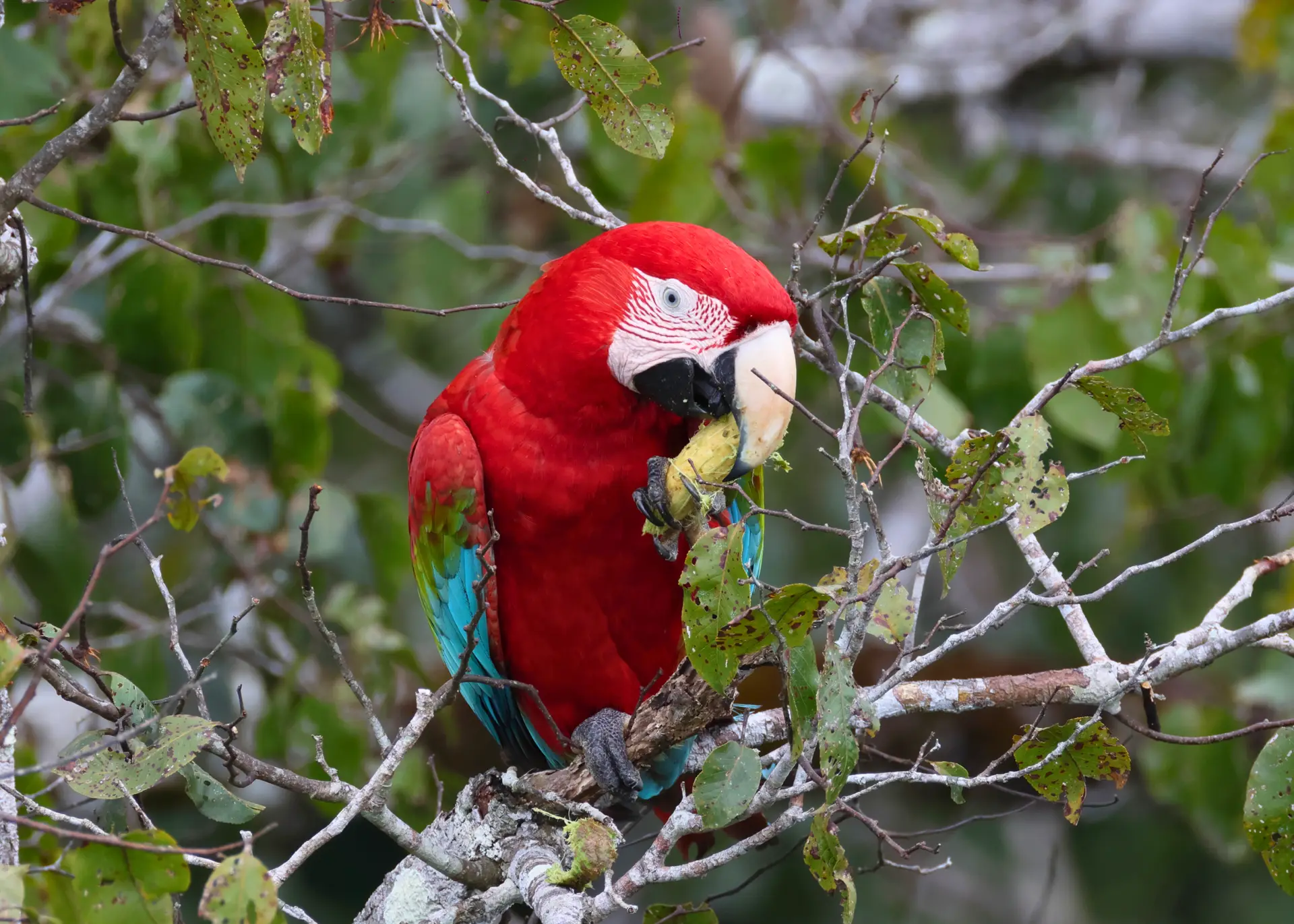
The Manu Road is recognized by professional birders as one of the world's premier overland birding routes. On this private 6-day expedition you follow it from the high Andes near Cusco at up to 3,900 m down to the Amazonian foothills at about 500 m – through puna wetlands, elfin forest, cloud forest, bamboo thickets and lowland oxbow lakes, with a realistic chance of logging 450 to 500+ species. Highlights include a private Andean Cock-of-the-Rock lek, hummingbird feeder stations with species such as the Rufous-crested Coquette and Wire-crested Thorntail, bamboo specialists on the Villa Carmen trails and a raft trip on Machuwasi Oxbow Lake to see the prehistoric-looking Hoatzin. Woolly, capuchin and howler monkeys complete the experience. Private transport, native birding guide, 5 nights at Wayqecha, Cock-of-the-Rock Lodge and Villa Carmen Biolodge, all meals as per itinerary and all permits are included.
Tour Code
Maximum altitude
Travel Program
Day 1
Cusco – Huacarpay Lake – Acjanaco Pass – Wayqecha
ACCA Wayqecha Research Station (2,900 m)
Puna wetland, dry scrub and elfin forest · 3,500 m down to 2,900 m
We leave Cusco before dawn for Huacarpay Lake, a vital high-Andean wetland, to look for Puna Teal, Cinnamon Teal, Andean Duck, Wren-like Rushbird and the striking Many-colored Rush-Tyrant. The surrounding arid scrub holds regional endemics such as the Bearded Mountaineer and Rusty-fronted Canastero. We cross the Acjanaco Pass (3,500 m), the official entrance to Manu National Park, and descend through misty elfin forest, searching mixed flocks for the Hooded Mountain-Tanager, Gray-breasted Mountain-Toucan, Andean Snipe and Spectacled Redstart. We reach Wayqecha Research Station in the late afternoon; an optional night walk on the canopy boardwalk targets the Yungas Pygmy-Owl and Swallow-tailed Nightjar. Meals: lunch, dinner.
Cusco – Huacarpay Lake – Acjanaco Pass – Wayqecha
Day 1
ACCA Wayqecha Research Station (2,900 m)
Puna wetland, dry scrub and elfin forest · 3,500 m down to 2,900 m
We leave Cusco before dawn for Huacarpay Lake, a vital high-Andean wetland, to look for Puna Teal, Cinnamon Teal, Andean Duck, Wren-like Rushbird and the striking Many-colored Rush-Tyrant. The surrounding arid scrub holds regional endemics such as the Bearded Mountaineer and Rusty-fronted Canastero. We cross the Acjanaco Pass (3,500 m), the official entrance to Manu National Park, and descend through misty elfin forest, searching mixed flocks for the Hooded Mountain-Tanager, Gray-breasted Mountain-Toucan, Andean Snipe and Spectacled Redstart. We reach Wayqecha Research Station in the late afternoon; an optional night walk on the canopy boardwalk targets the Yungas Pygmy-Owl and Swallow-tailed Nightjar. Meals: lunch, dinner.
Day 2
Wayqecha – Cock-of-the-Rock Lodge
Cock-of-the-Rock Lodge (1,600 m)
Upper and middle cloud forest · 2,900 m down to 1,600 m
At dawn we explore the Wayqecha trails for secretive high-elevation skulkers such as the Red-and-white Antpitta, Puna Thistletail and Marcapata Spinetail. Further down the Manu Road the forest becomes dense and moss-draped. Tactical stops reveal the Blue-banded Toucanet, Golden-headed Quetzal, Scaled Fruiteater and mixed tanager flocks. By early afternoon we reach Cock-of-the-Rock Lodge and head straight to the private hide at an active lek, where up to a dozen brilliant scarlet-orange males call, wing-snap and dance to attract females. Meals: breakfast, lunch, dinner.
Wayqecha – Cock-of-the-Rock Lodge
Day 2
Cock-of-the-Rock Lodge (1,600 m)
Upper and middle cloud forest · 2,900 m down to 1,600 m
At dawn we explore the Wayqecha trails for secretive high-elevation skulkers such as the Red-and-white Antpitta, Puna Thistletail and Marcapata Spinetail. Further down the Manu Road the forest becomes dense and moss-draped. Tactical stops reveal the Blue-banded Toucanet, Golden-headed Quetzal, Scaled Fruiteater and mixed tanager flocks. By early afternoon we reach Cock-of-the-Rock Lodge and head straight to the private hide at an active lek, where up to a dozen brilliant scarlet-orange males call, wing-snap and dance to attract females. Meals: breakfast, lunch, dinner.
Day 3
Cloud Forest of the San Pedro Valley
Cock-of-the-Rock Lodge (1,600 m)
Full-day birding in the middle cloud forest · night walk
We spend the full day in the middle cloud forest of the San Pedro Valley, one of the most bird-rich elevations on the planet. Huge canopy flocks often hold more than 15 tanager species – including Paradise, Golden, Spotted, Bay-headed, Blue-necked and Orange-eared Tanagers. In the mid-story and understory we search for the Amazonian Umbrellabird, Crested Quetzal, Black-streaked Puffbird, Solitary Eagle and Uniform Antshrike. Mammals are active too: woolly monkeys, brown capuchins and tayras. After dusk we walk the river trails in search of the Lyre-tailed Nightjar and Rufescent Screech-Owl. Meals: breakfast, lunch, dinner.
Cloud Forest of the San Pedro Valley
Day 3
Cock-of-the-Rock Lodge (1,600 m)
Full-day birding in the middle cloud forest · night walk
We spend the full day in the middle cloud forest of the San Pedro Valley, one of the most bird-rich elevations on the planet. Huge canopy flocks often hold more than 15 tanager species – including Paradise, Golden, Spotted, Bay-headed, Blue-necked and Orange-eared Tanagers. In the mid-story and understory we search for the Amazonian Umbrellabird, Crested Quetzal, Black-streaked Puffbird, Solitary Eagle and Uniform Antshrike. Mammals are active too: woolly monkeys, brown capuchins and tayras. After dusk we walk the river trails in search of the Lyre-tailed Nightjar and Rufescent Screech-Owl. Meals: breakfast, lunch, dinner.
Day 4
Cock-of-the-Rock Lodge – Kosñipata Valley – Villa Carmen
Villa Carmen Biolodge (500 m)
Transition zone and feeder stations · 1,600 m down to 500 m
In the morning we watch the lodge gardens for hummingbirds such as the Violet-fronted Brilliant and Booted Racket-tail. Descending the Kosñipata Valley, we target transition-zone specialties such as the Black-backed Tody-Flycatcher, Cerulean-capped Manakin and Peruvian Piedtail. By midday we reach the Amazonian lowlands and Villa Carmen Biolodge, a 700-hectare reserve managed by the conservation association ACCA. The afternoon is spent at the hummingbird and fruit feeders, with the Rufous-crested Coquette, Gould's Jewelfront, Wire-crested Thorntail, Lemon-throated Barbet and Great Potoo as targets. At night we look for the Spectacled Owl and Tawny-bellied Screech-Owl around the lodge. Meals: breakfast, lunch, dinner.
Cock-of-the-Rock Lodge – Kosñipata Valley – Villa Carmen
Day 4
Villa Carmen Biolodge (500 m)
Transition zone and feeder stations · 1,600 m down to 500 m
In the morning we watch the lodge gardens for hummingbirds such as the Violet-fronted Brilliant and Booted Racket-tail. Descending the Kosñipata Valley, we target transition-zone specialties such as the Black-backed Tody-Flycatcher, Cerulean-capped Manakin and Peruvian Piedtail. By midday we reach the Amazonian lowlands and Villa Carmen Biolodge, a 700-hectare reserve managed by the conservation association ACCA. The afternoon is spent at the hummingbird and fruit feeders, with the Rufous-crested Coquette, Gould's Jewelfront, Wire-crested Thorntail, Lemon-throated Barbet and Great Potoo as targets. At night we look for the Spectacled Owl and Tawny-bellied Screech-Owl around the lodge. Meals: breakfast, lunch, dinner.
Day 5
Villa Carmen – Bamboo Forest & Machuwasi Oxbow Lake
Villa Carmen Biolodge (500 m)
Bamboo specialists · raft trip on the oxbow lake
In the morning we explore the rare Guadua bamboo habitat on the Villa Carmen trails. Specialists include the Rufous-headed Woodpecker, Manu Antbird, Goeldi's Antbird, Bamboo Antshrike, White-lined Antbird and the threatened Peruvian Recurvebill. In the afternoon we board traditional wooden rafts on Machuwasi Oxbow Lake. Along the marsh edges we watch noisy colonies of Hoatzins, plus Horned Screamers, Blackish Rails, Rufous-sided Crakes, Pale-eyed Blackbirds and Sungrebes. Red howler monkeys and squirrel monkeys are often seen around the lake. Meals: breakfast, lunch, dinner.
Villa Carmen – Bamboo Forest & Machuwasi Oxbow Lake
Day 5
Villa Carmen Biolodge (500 m)
Bamboo specialists · raft trip on the oxbow lake
In the morning we explore the rare Guadua bamboo habitat on the Villa Carmen trails. Specialists include the Rufous-headed Woodpecker, Manu Antbird, Goeldi's Antbird, Bamboo Antshrike, White-lined Antbird and the threatened Peruvian Recurvebill. In the afternoon we board traditional wooden rafts on Machuwasi Oxbow Lake. Along the marsh edges we watch noisy colonies of Hoatzins, plus Horned Screamers, Blackish Rails, Rufous-sided Crakes, Pale-eyed Blackbirds and Sungrebes. Red howler monkeys and squirrel monkeys are often seen around the lake. Meals: breakfast, lunch, dinner.
Day 6
Villa Carmen – Manu Road – Cusco
Final lowland session · return drive with stops
Full-day drive with birding stops
An early-morning session around the Villa Carmen clearing and stream trails targets any remaining species on the checklist – such as Chestnut-eared Aracari, Fiery-capped Manakin or Fine-spotted Woodpecker. After breakfast we drive back up the Manu Road, with targeted stops at specific elevations to fill gaps in your list. We cross the Acjanaco Pass by mid-afternoon and arrive in Cusco by early evening. Meals: breakfast, lunch.
Villa Carmen – Manu Road – Cusco
Day 6
Final lowland session · return drive with stops
Full-day drive with birding stops
An early-morning session around the Villa Carmen clearing and stream trails targets any remaining species on the checklist – such as Chestnut-eared Aracari, Fiery-capped Manakin or Fine-spotted Woodpecker. After breakfast we drive back up the Manu Road, with targeted stops at specific elevations to fill gaps in your list. We cross the Acjanaco Pass by mid-afternoon and arrive in Cusco by early evening. Meals: breakfast, lunch.
Price from
US$1,720.00
Services
What's included
Pre-Departure Briefing: In-person orientation in Cusco with your lead guide 2 days before departure.
Birding Guide: Senior Peruvian ornithology guide, bilingual (Spanish and English), with Swarovski/Leica spotting scope and local playback.
Transportation: Dedicated 4x4 or private Mercedes Sprinter, optimized for mountain passes and frequent stops along the Manu Road, from/to your hotel in Cusco.
Accommodation: 5 nights at Wayqecha, Cock-of-the-Rock Lodge and Villa Carmen Biolodge, all with private bathroom and hot water.
Meals: 5 breakfasts, 5 lunches and 5 dinners; vegan, vegetarian, gluten-free and dairy-free on request.
Permits: Entrance permits for Manu National Park, ACCA research stations, private reserves and Machuwasi Lake raft rentals.
Fair Working Conditions: All drivers and staff work under Incatrekkers' fair-wage, insurance and working condition standards.
What's not included
Flights: International or domestic flights to/from Cusco.
Insurance: Medical, evacuation and travel insurance is mandatory.
Drinks & Laundry: Alcoholic beverages, bottled soft drinks and laundry service.
Tips: Discretionary tips for guides, driver and lodge staff.
Meals: Breakfast on day 1 and dinner on day 6.
Personal Equipment: Binoculars, cameras and footwear.
Character of the trip
Condition
Moderate
Altitude
Moderate (up to 3,900 m)
Culture / nature
Balanced
Fitness – moderate: Most birding takes place on flat gravel roads, broad forest trails, clearings and boardwalks. The main challenges are early starts (4:30–5:30 am), variable weather and long field days.
Altitude – moderate: From the high Andes near Cusco at up to 3,900 m (12,790 ft) down to the Amazonian foothills at about 500 m (1,640 ft) – from cold 5 °C (41 °F) passes to hot, humid 30 °C (86 °F) lowlands.
Culture & nature – nature-focused: Five ecological zones in six days and a realistic 450 to 500+ bird species, plus woolly, capuchin and howler monkeys.
Lodges: 5 nights at Wayqecha Research Station, Cock-of-the-Rock Lodge and Villa Carmen Biolodge, all with private bathrooms and hot water.
Dates and Prices
Individual Dates
Optional
Cusco City Tour (half day)
Shared tour – you can find the private tour under "Day Tours".
US$20.00
per person
Sacred Valley Tour (full day)
Shared tour – you can find the private tour under "Day Tours".
US$25.00
per person
Groups of 5 or more: contact us for special rates and tailor-made options.
Travel Information
Good to know
Itinerary: The schedule may vary slightly to maximize bird sightings.
Best time to go: Birding on the Manu Road is productive year-round. The dry season (May to October) offers better road conditions, less rain and easier walking. The wet and breeding season (November to April) brings peak vocal activity, and fruiting trees attract large numbers of tanagers, toucans and cotingas.
Fitness: Moderate. Most birding takes place on flat gravel roads, broad forest trails and boardwalks. The challenges are early starts (4:30–5:30 am), weather ranging from 5 °C at the pass to 30 °C in the lowlands, and long field days.
Health: The tour reaches the lowlands at about 500 m. Please consult your travel health clinician about yellow fever vaccination and malaria prophylaxis before your trip.
Dietary needs: The lodges cater for vegan, vegetarian, gluten-free and dairy-free diets as well as allergies – please let us know when booking.
Electricity & connectivity: Lodges run on solar power or generators; there is hardly any cell service or Wi-Fi.
Private tour: This is a private expedition; small-group departures are available on request.
Combine it: As the tour starts and ends in Cusco, it fits perfectly before or after the Inca Trail or a visit to Machu Picchu.
What to bring
Binoculars: Essential – waterproof 8x42 or 10x42.
Clothing: Lightweight, quick-dry clothing in neutral tones (olive, tan, brown) – avoid bright colors such as white, red or yellow. A warm fleece or down jacket for days 1 and 6 in the highlands and breathable tropical clothing for the lowland days.
Rain gear: High-quality rain jacket and poncho.
Footwear: Waterproof hiking boots plus breathable trail runners or rubber boots for muddy forest trails.
Headlamp: With red-light mode for night walks.
Protection: Insect repellent (picaridin or DEET) and a brimmed hat.
Camera: Telephoto lens of 300 mm or more, extra batteries and memory cards.
Original passport: Required at the national park checkpoints.